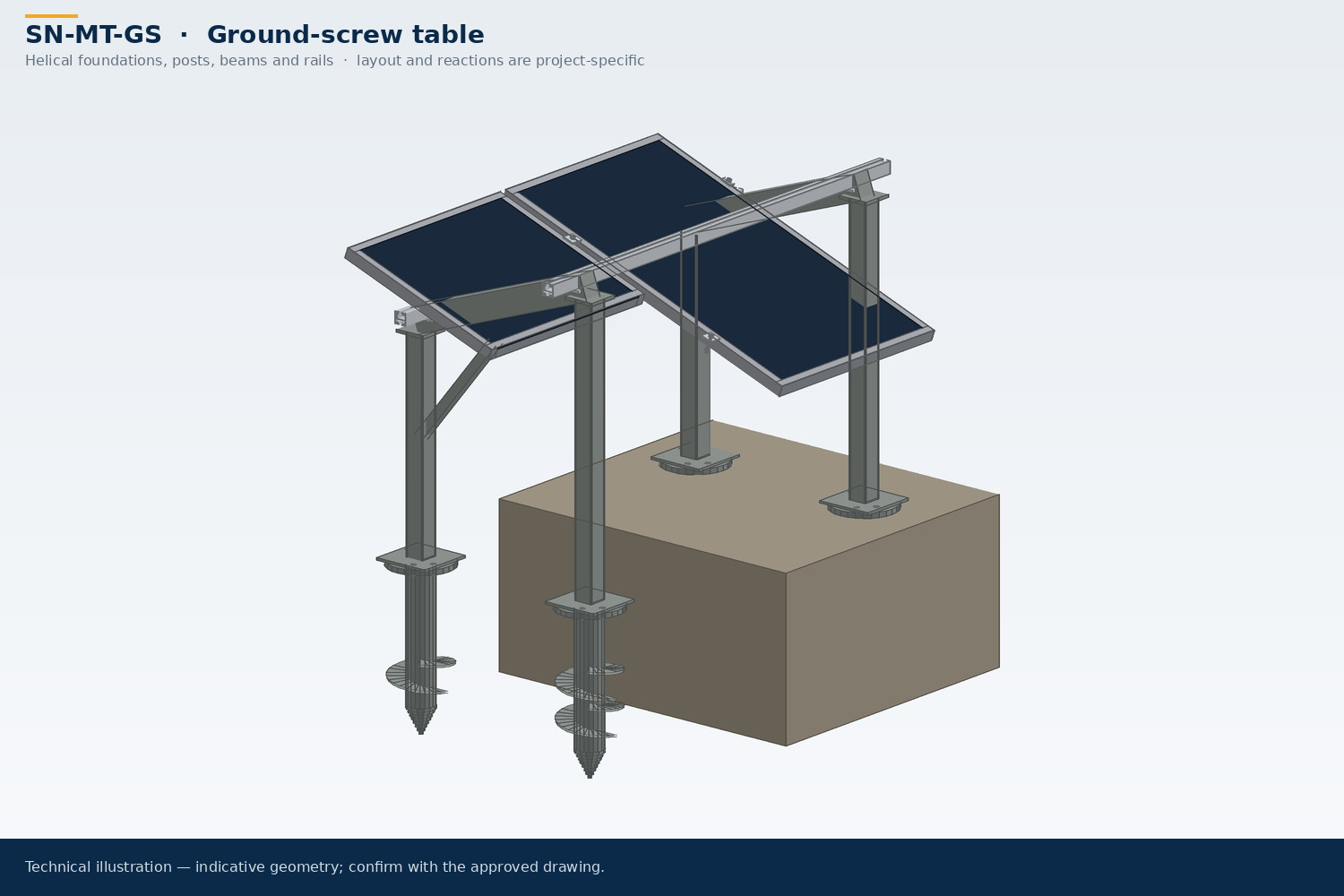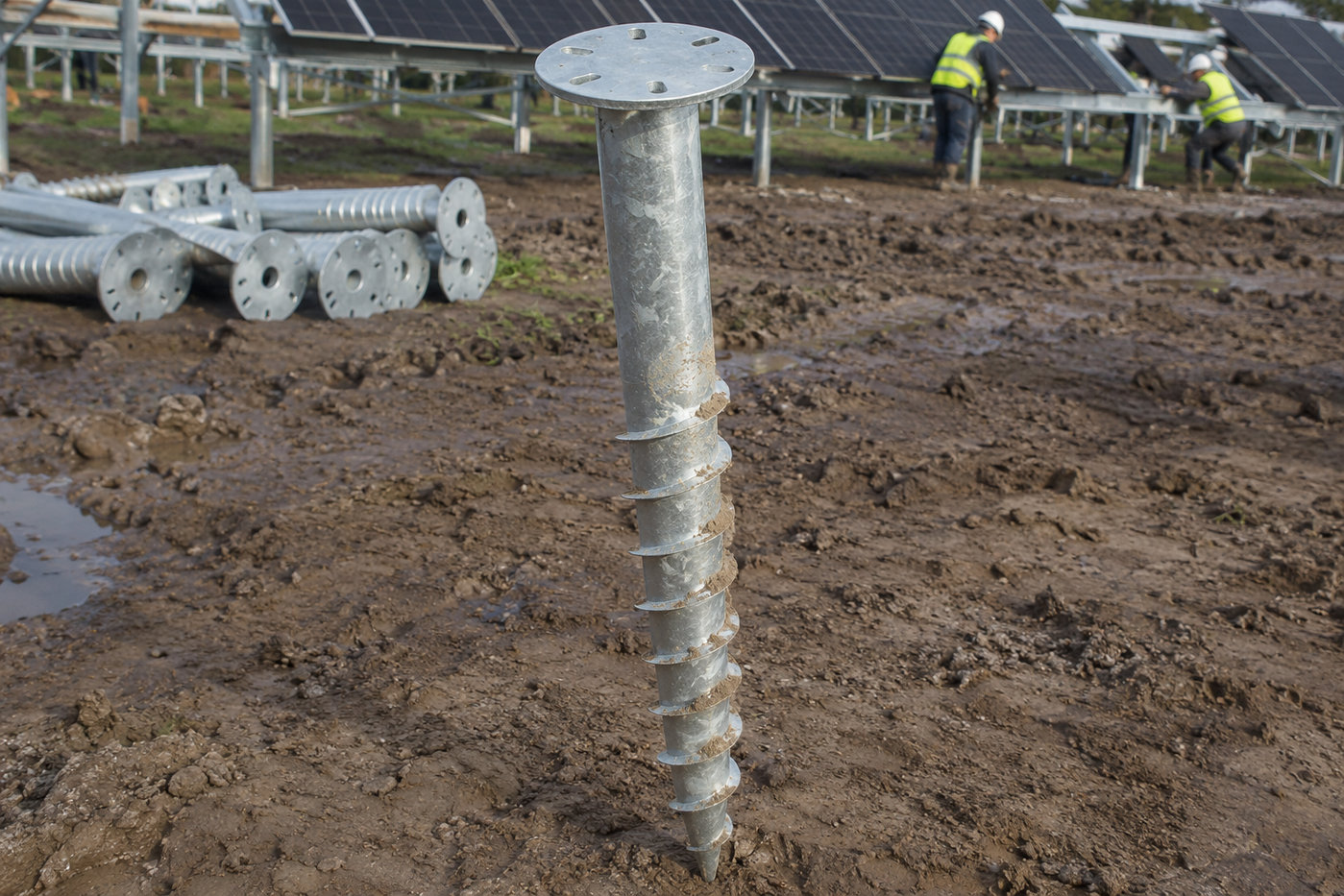
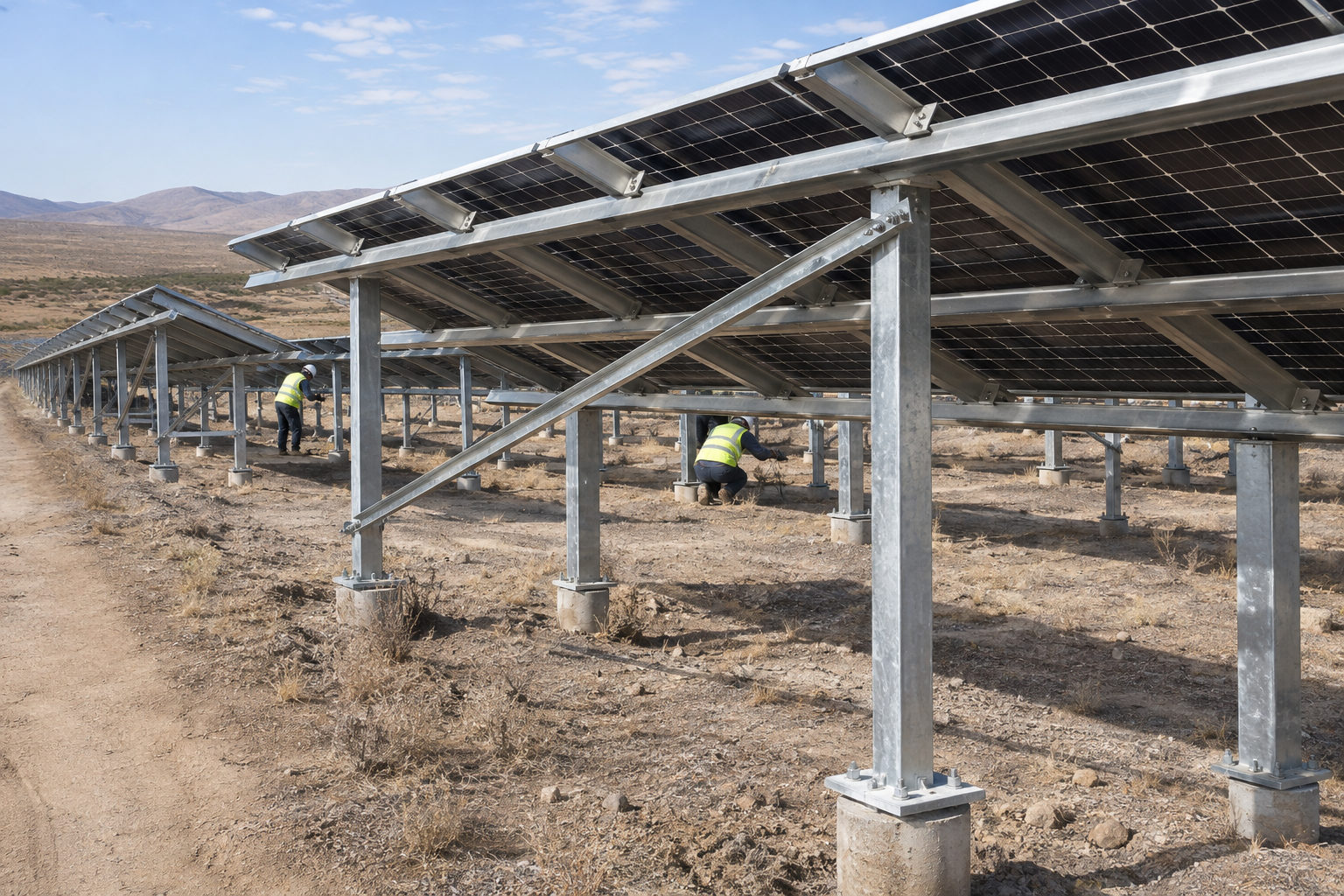
Ground screws and concrete foundations can both support a ground-mounted PV array, but their suitability depends on the site and engineered load path. Start with ground conditions, structural reactions and installation access before comparing material prices. SolarNova supplies mounting materials; the catalog is a starting point for an RFQ, and foundation dimensions and performance must be confirmed for the actual project.
Establish the ground conditions first
A foundation connects the array to the ground, so information about the soil is central to selection. Obtain the available geotechnical report, topographic survey and groundwater information. Identify made ground, buried services, obstructions and any restrictions on excavation or ground disturbance. A field that looks uniform at the surface may require different foundation details across its footprint.
The responsible designer should specify what investigation and verification are needed. Do not use a photograph, a neighboring project’s foundation or a generic catalog length as a substitute for the site’s ground assessment. Where information is missing, identify it as pending in the RFQ and ask bidders to state the assumptions behind their proposals.
Evaluate ground screw installation
Ground screws may offer a practical route where the soil and access permit the proposed installation method. Their potential advantages need to be assessed against equipment access, installation tolerances and the ability to reach the required embedment. Obstructions, very variable ground or refusal during installation can change the method and cost.
Request the proposed screw geometry, material, finish and connection detail together with the verification plan. Installation records can be useful, but their interpretation belongs within the project engineering process. Do not assume that an installation torque value alone establishes every required resistance. This guide supplies no universal pull-out value, screw length or acceptance threshold.
Evaluate concrete foundations
Concrete foundations require consideration of excavation, formwork where applicable, reinforcement, anchor positioning and the concrete supply plan. Groundwater, excavation stability, weather and site access can affect construction. The schedule also needs to account for the engineer’s requirements before the support structure is loaded.
Define the boundary between supplied mounting materials and locally constructed civil works. A quotation for steel supports may exclude concrete, reinforcement, excavation, templates or anchor installation. Compare the full foundation package rather than treating the price of a screw and the price of concrete as equivalent scopes. Ask for drawings that coordinate the foundation with the supplied base connection.
Compare the complete structural connection
Both approaches must transfer the array’s actions through the support members, connections and foundation into the ground. Uplift, lateral force, compression and movement need consideration under the project’s design basis. The foundation choice can change support geometry, installation tolerances and the connection hardware required above ground.
The SN-MT-GROUND system lists ground screws or concrete foundations after soil review. Its indicative catalog envelope is not an approval for a particular site. Ask the responsible designer to coordinate the foundation reactions, connection drawings and installation sequence before the final material schedule is released.
Consider exposure and inspection access
Below-ground and above-ground exposure can differ. Request a material and corrosion-protection proposal that reflects the project’s conditions and maintenance strategy. Coating descriptions on a product page do not establish service life for every soil or environment. Identify any requirements for inspection, coating repair and documentation in the RFQ.
Plan access for setting out, installation machinery, material handling and later inspection. A method that looks efficient on an open drawing may be difficult around drainage channels, slopes or existing infrastructure. Include these constraints in the site package so suppliers can make their exclusions and assumptions visible.
Make the quotation comparable
Request separate foundation options against the same module layout and design inputs. Include quantities, supply boundaries, engineering deliverables, installation responsibilities, inspection requirements and the delivery destination. Ask how unexpected ground conditions would be handled and who approves any revised foundation detail.
Compare total scope, schedule and evidence before price. Samples, final configurations and delivery dates are available on request and confirmed in the quotation. Contact us for payment terms; commercial terms are confirmed in the written quotation.
Contact SolarNova with your layout, soil information and foundation preferences to request a coordinated mounting-material quotation and identify the technical inputs still required.